
A digital artwork sells for 69 million dollars. This is the new craze in the art world and it’s called NFT. What is an NFT? Why did it suddenly burst into our lives? Is this the future of art? Here's everything you need to know about the new media that is laying golden eggs.
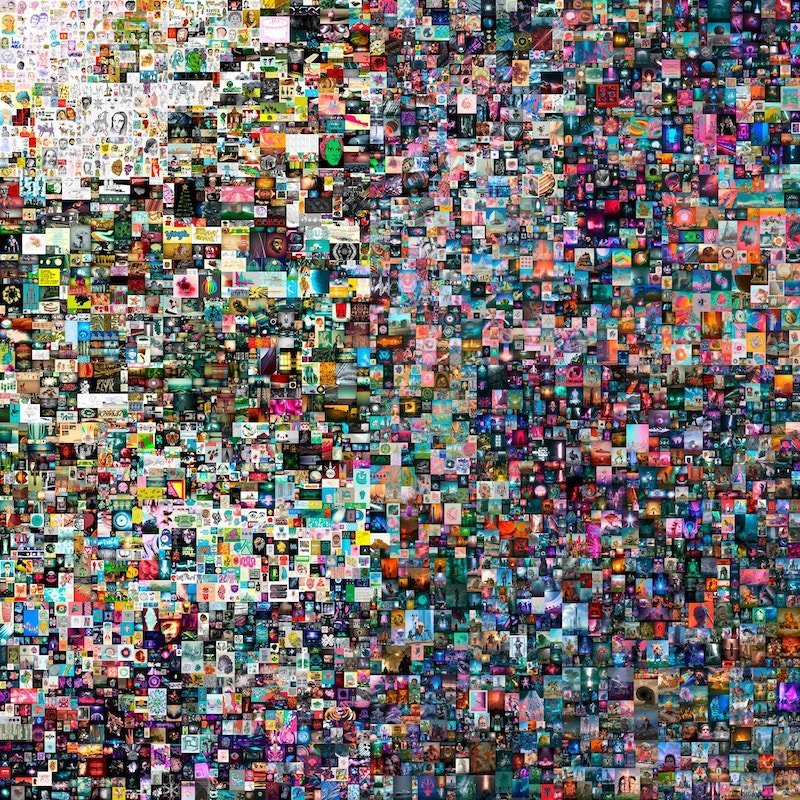
Let’s start from the end – 22 million people held their breath during the last half hour of an online sale at Christie’s on the 11th of March – a sale that contained only one work: a digital creation by Mike Winkelman a.k.a Beeple. You probably hadn’t previously heard of him, even though he has almost 2 million followers on Instagram. I participated in a conversation with him during the dramatic and historic half hour of the auction, on the Clubhouse social platform. There were hundreds of young people there, who were inspired by his success and the potential possibilities opening up for artists of a new kind. Winkelman’s response to the end of this dramatic sale can be seen here. Back to Winkelman’s story later on but first a basic question:
What is an NFT?
The acronym NFT stands for Non-Fungible Token – a term from the realm of blockchain, which is foreign to most of us, in the context of art. Up till now, the blockchain has mostly been associated with digital currencies such as Bitcoin and the like. This is a web technology that enables encrypted commerce, in a secure, transparent manner and mainly without intervention of agents. The concept of a blockchain creates an indelible record of all transactions related to a particular currency or any other digital asset traded in blockchain technology.
The units in the blockchain are called tokens. When people trade coins, they talk about fungible tokens – tokens of equal value – like banknotes. But there is also the option to trade in unique assets and these are the NFT – Non fungible tokens. The NFT is actually a digital shell that can contain any unique file – a digital artwork, a music file or any other digital file – even a tweet from your Twitter. It can even contain a certificate of ownership of physical assets such as real estate.
Trading in NFTs is conducted in the digital space, using digital currencies – mainly Ethereum, but following the success, other currencies such as Bitcoin also create trading spaces for NFTs. So to get into the game, the basic condition is to own a crypto currency wallet.
Death of the old by @Grimes
Sold for $400,000
Crypto Art
One of the problems with digital art has always been the ease with which it can be replicated. The more duplicates of a work, the lower its value and the lesser the possibility of trading it. The principle of rarity its basic in the art market. Blockchain technology can solve the problem through the concept of “digital rarity” – producing a limited number of copies, which can, through the blockchain, track the provenance (chain of ownership) of the work – another very important concept in the art market, which is, of course, related to authenticity . Once the digital work is attached to the artist’s declaration that he is indeed the creator, they can not be separated and from now on, every sale and purchase of the work will be documented in its unique blockchain. Another interesting detail about trading in crypto art is that, unlike standard trading, the artist gets a percentage not only from the initial sale, but also from subsequent sales. Every time the work changes hands, the artist also is benefited.
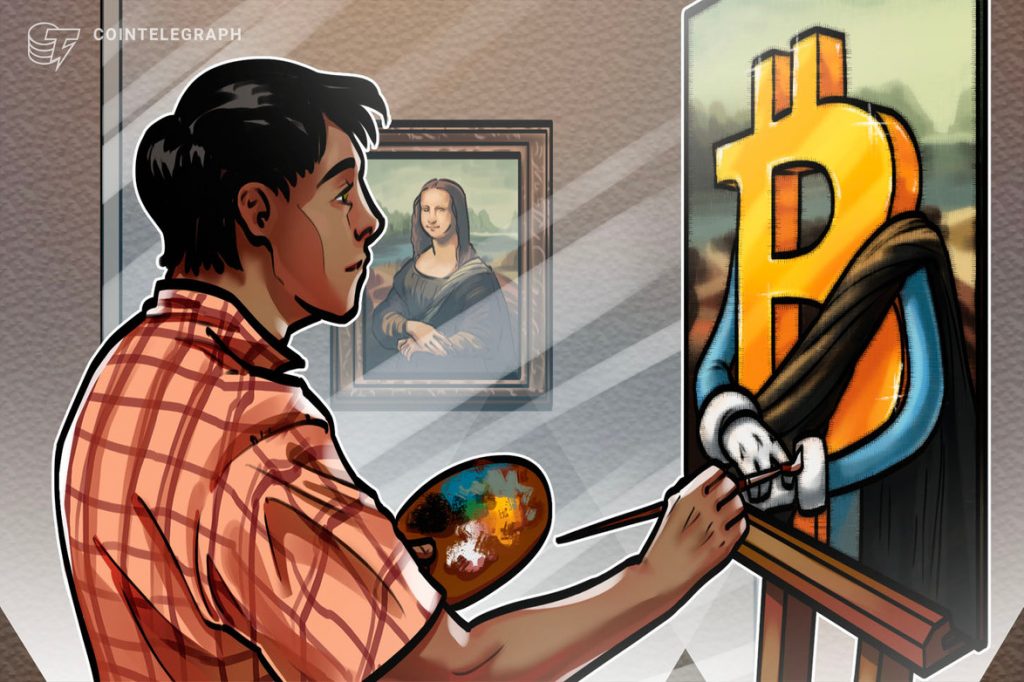
Another difference between art works in the blockchain space and those in the real world is that even if the work is privately owned, it can still be viewed and shared online. Just this week it was announced that the founder of Twitter is selling his first tweet as an NFT. It doesn’t change the fact that anyone can log in to their Twitter account and see the tweet. absurd? Hard to digest? Maybe it just requires a change in perception about ownership. Art collectors keep their collection at home, at best, or in storage, at worst. There are cases where important works are lent to museums and then the public gets to see them but in most cases a work sold to a private collector will disappear from the public eye. The concept of ownership as we know it, involves exclusivity and this is the great dissonance in the context of crypto art – there is no more exclusivity. That is, the ownership is exclusive but that doesn’t affect the presence of the works on the web. Anyone who has a computer can see them and even download them.
How did it start?
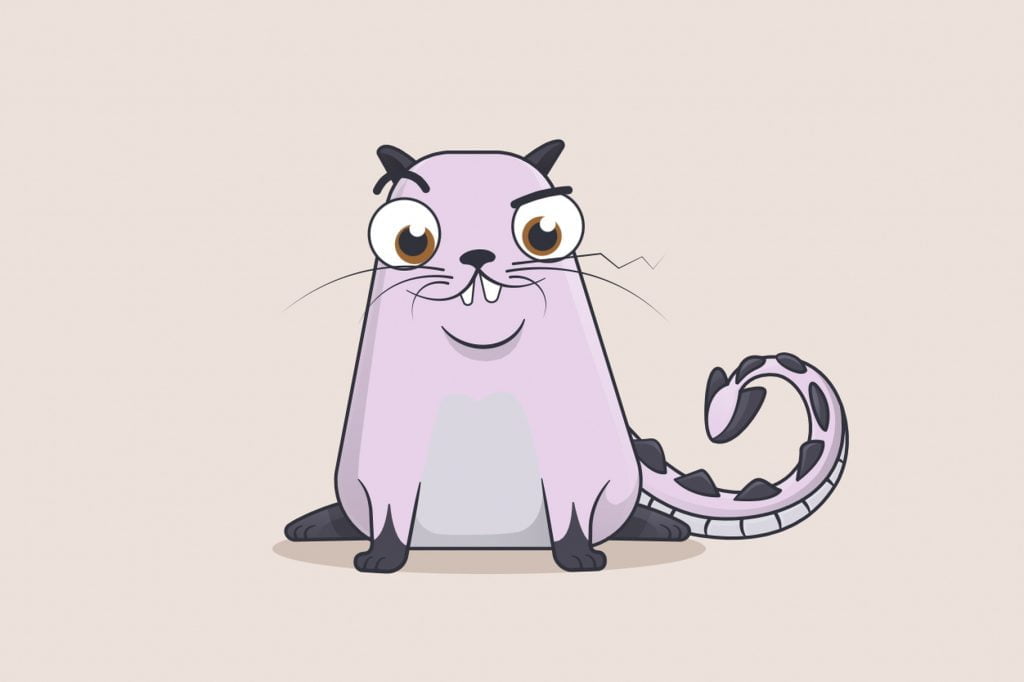
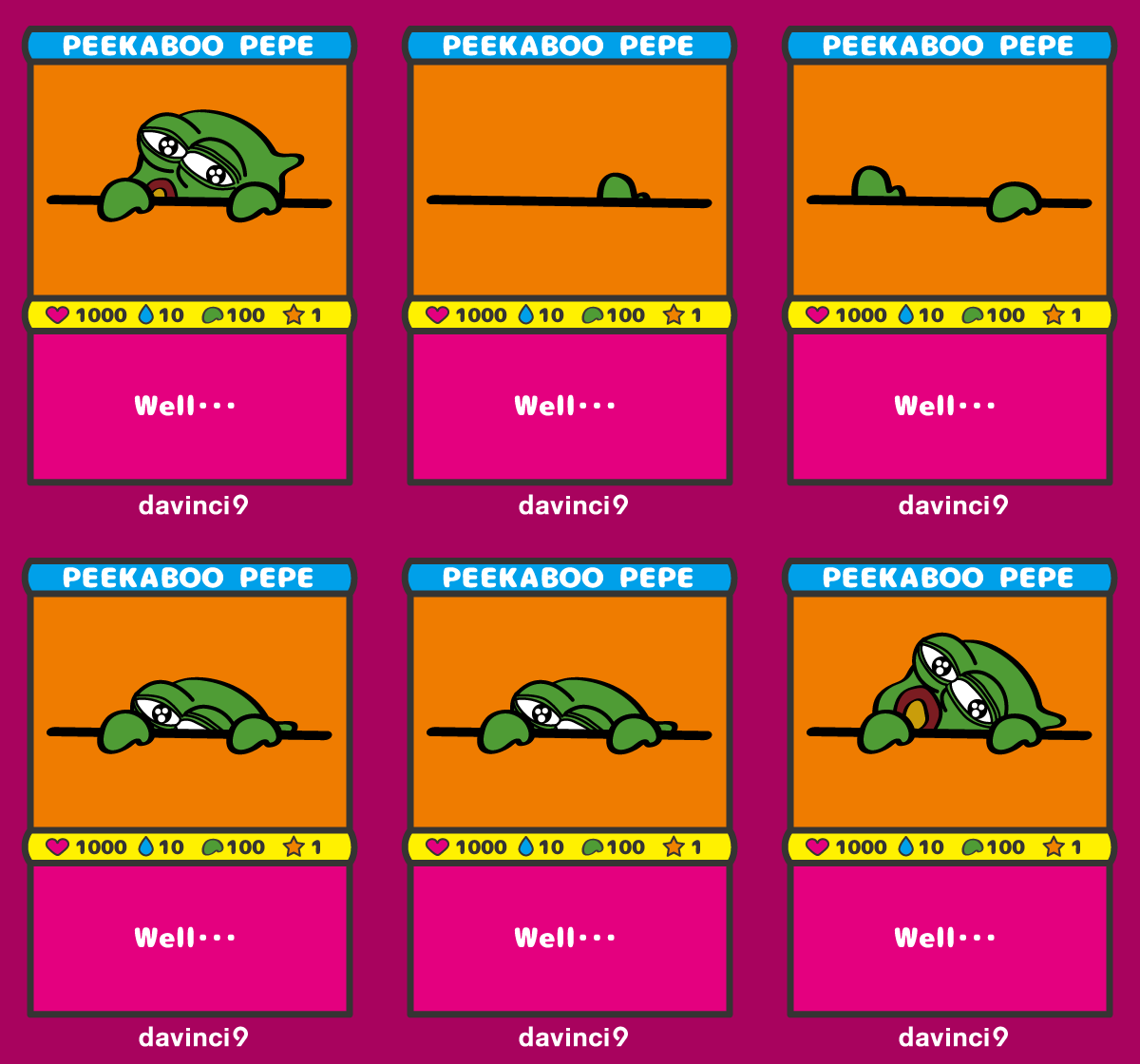
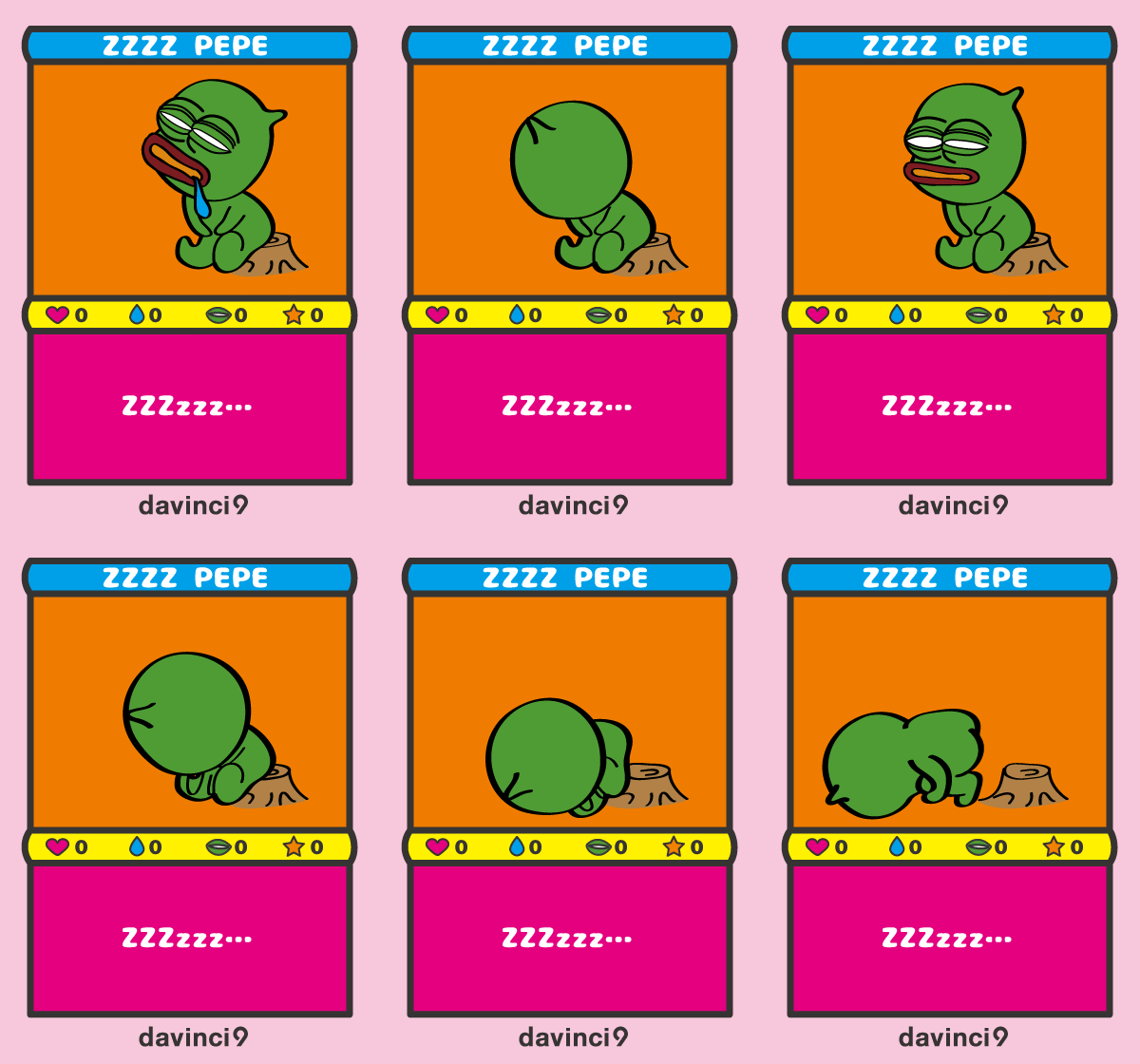
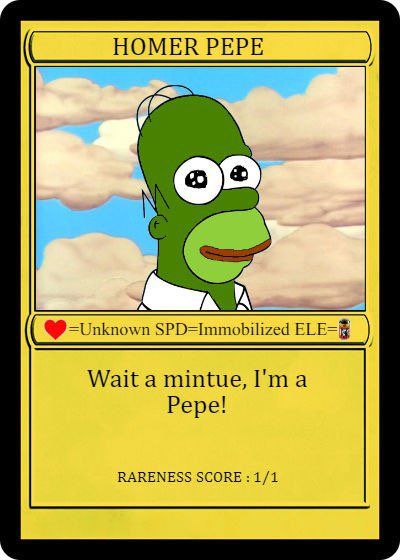
NFT’s have actually been around for several years. In fact, as early as 2016, images began to spread throughout the blockchain space. The first was a cartoon frog named Pepe – a veteran internet meme that has been circulating on the net since 2008. In 2016, Pepe the Frog was converted to a blockchain and became the subject of a digital card series, a bit like the Garbage Pail Kids cards from the 1980s. Anyone can invent a new card and offer it as an addition to the series. The early series of CryptoArt look very immature – the crypto-punk series followed by the crypto-kitty series, are painted in a very simple and naive style, based on a basic character to which elements are added, that create different types.
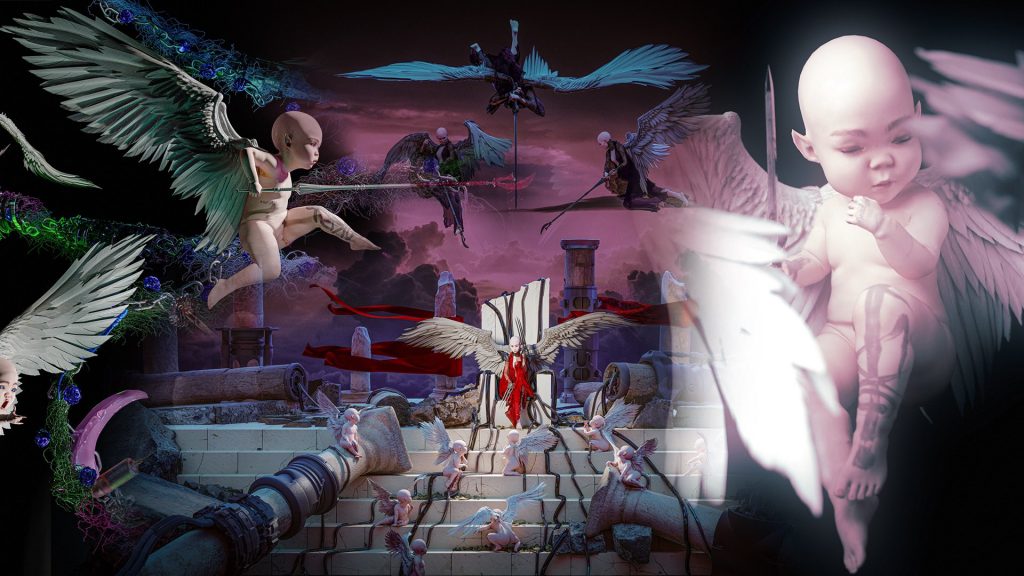
It’s all still very, very new and as in any digital field, there are pioneers, the Early Adopters – who are adopting the technology, but one can compare the crypto art to the Internet in its infancy – people are experimenting to see what can be done with it. It attracts art lovers with a penchant for technology, who want to be a part of this pioneering space. There are thousands of young people under the age of 30 who have made a fortune from cryptocurrencies and feel more comfortable in the virtual space than in galleries or museums. They believe in NFTs and invest considerable sums in them. One could even say that there is a new movement here, of collectors of a new kind and of a particularly lively trade.
Mike Winkleman
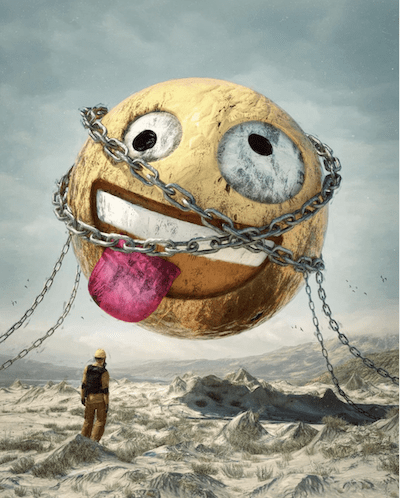
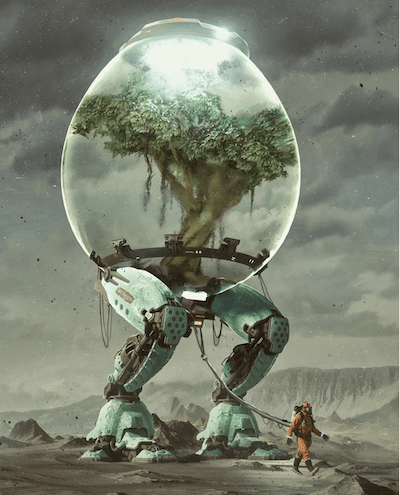
The Christie’s sale is already a groundbreaking event in a way that’s hard to grasp, Winkelman has become the third most expensive living artist – after Jeff Koons and David Hockney.
The two images above are from his Instagram, that he has been updating with a new image every day since 2008. That makes about 5,000 images that created the mosaic that sold for $69 million.
Winkleman, although self taught, is a serious and talented artist that has worked with artists such as Justin Bieber, Eminem, One Direction and others, creating art for their music videos and performances. He is 39 years old, father of two and lives in Wisconsin. His place in the history of art is already guaranteed as the artist that started the NFT craze.

NFT trading
The big breakthrough of crypto-art began in early 2018, when trading started at the first fair of rare digital art. At the same sale, a card from the Papa Frog series was sold at a record price of $38,500. It was a Homer Simpson card that sold again this week for $ 312,000. It is already clear that today it is no longer considered a high price.
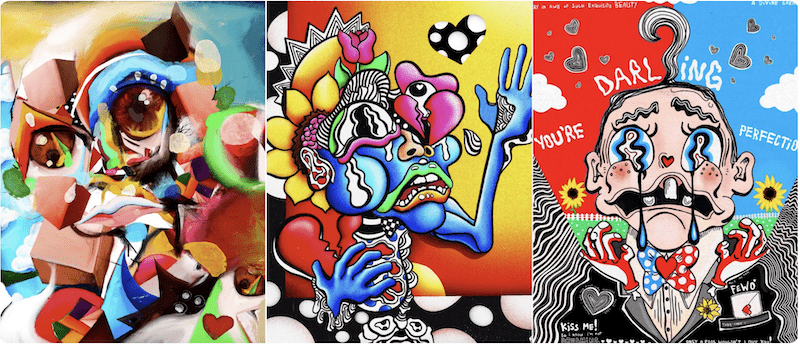
In early March 2021, Canadian singer Grimes (Elon Musk’s partner) sold her first NFT’s collection for $ 6 million in less than 20 minutes. The collection contained ten works made in collaboration with her brother Mac Boucher. The surrealist works are accompanied in part by the musician’s music (example in the video above).
Till now, all crypto art trading took place online, on dedicated portals like OpenSea, SuperRare and Nifty Gateway. Christie’s auction house is the first to realize the potential that exists in the blockchain space.
Therefore, they took action and on February 25, put Winkelman’s work up for sale for only $100. For the first time, the auction house made it possible to pay in crypto currency (only the commission was paid in dollars). The entire amount of the sale goes to the artist, as in all crypto art trading – there are no profit partners, like galleries or agents.
The future of NFT
Some people I asked about NFT dismissed it as a silly and fleeting trend. I suggest to all the critical and dismissive to look at it a little differently. For the first time, digital art also has economic value and it is thanks to the blockchain that it is possible to create secure ownership.
Beyond the initial enthusiasm from the new category, one has to remember the digital natives, the younger generation, that have invested in bitcoin and have amassed huge fortunes. Their brain works differently from us digital immigrants. This is not to say that the classical art world will cease to exist. But in a world that is increasingly marching towards hybrid existence or what is today called Metaverse, which opens our existence to new possibilities thanks to technology – it is harder than ever to foresee the future.
There is one point that may not change – the human need for confidence, when it comes to economic decisions. Therefore, experts who mediate between the audience and the new art are still valid. Like for example, Fanny Lakoubay, who is both a collector of CryptoArt and a consultant. You can see her collection on her website and you can even download the items to your computer. A new world, have we already mentioned? There is also a museum of blockchain art – MoCDA is the first museum of contemporary digital art that also deals with education for everything related to the new world of NFT’s.
It was announced this week that the world’s first exhibition of crypto art will be held at the UCCA Museum in Beijing. This is the first initiative to mark the integration of physical museums and NFT representations in the physical world. It’s also important for the artists themselves, who need branding – despite the contradiction with the democratic essence of the blockchain space, in which there are no mediators. Optimally, the best will be the most prominent. The question is what is considered good in this new media and what are the quality determining parameters. Many creators have already made successful careers in the world of design, in the online music and gaming industry. They have a large fan base. They are the mega-stars of a new world that is just beginning and should be taken seriously.
Finally, this topic is very new and there is a lot to say about it. If you have any questions on the subject, you can add in the comments and I will do my best to answer.

Great piece for those new to NFT’s Debby! Thanks for sharing.